La vraie contrainte du coach
Le coaching personnel a un plafond intégré à son modèle : le chiffre d’affaires égale les heures délivrées, et les heures sont finies. Chaque coach en connaît la conséquence. Le client reçoit une ou deux heures excellentes par semaine et cent soixante-six heures sans supervision, et les résultats, comme les renouvellements, se décident dans les heures sans supervision. Le coach capable d’être présent entre les séances gagnerait, mais la présence entre les séances n’a jamais été ni facturable ni faisable.
C’est ce vide que l’IA comble réellement. Pas remplacer la séance ; occuper les heures autour.
Où l’IA mérite sa place aujourd’hui
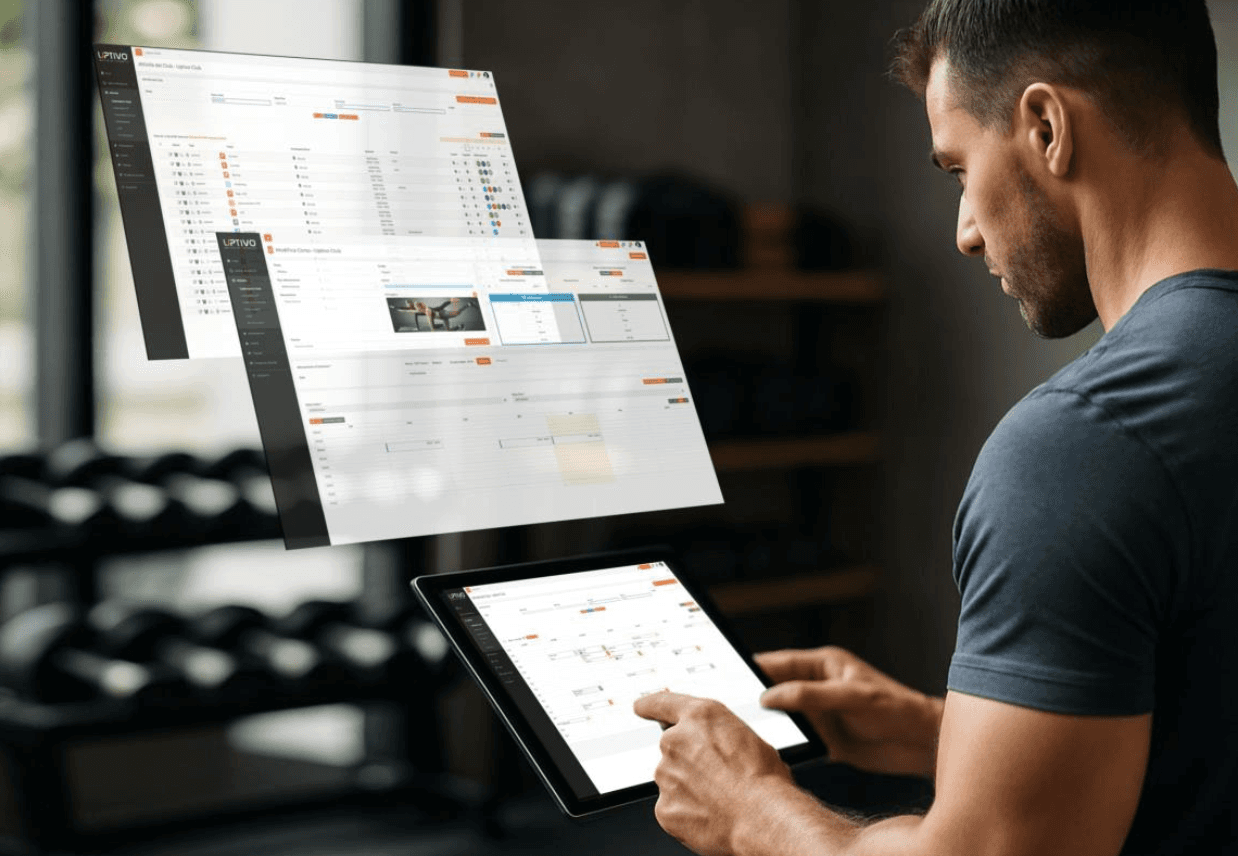
Le brouillon de programme. Un constructeur d’entraînements IA transforme le brief du client, objectif, historique, matériel, blessures à respecter, en un brouillon de programme en quelques minutes, en puisant dans une bibliothèque d’exercices structurée. Le coach corrige avec son jugement au lieu d’assembler de zéro. Le temps de rédaction passe d’une soirée à une pause café, et c’est de la capacité que vous pouvez vendre. C’est ainsi que fonctionne le constructeur dans le logiciel de coaching personnel d’Uptivo, sur une bibliothèque de plus de 1 300 exercices en vidéo.
Le suivi entre les séances. Un coach IA comme Nate prend des nouvelles les jours où vous ne pouvez pas : il relance le client dont la semaine glisse, répond aux petites questions qui ne méritent pas un message pour vous, et empêche les séances à la maison de ne pas avoir lieu en silence. Le client se sent accompagné ; le coach lit un résumé au lieu de trente conversations.
Le monitoring qui surveille tous les clients à la fois. Quand les clients s’entraînent avec des capteurs connectés, n’importe quel appareil Bluetooth LE ou ANT+, l’IA voit ce que vous verriez si vous aviez le temps : séances faites ou sautées, tendances d’effort, l’habitué dont l’intensité a discrètement baissé. Vous recevez la liste des exceptions ; votre attention va là où elle change les résultats.
L’administratif ingrat. Notes de séance, messages récapitulatifs, synthèses de progrès rédigées pour votre validation. Personne n’est devenu coach pour écrire des récapitulatifs.
Ce qui reste humain, et pourquoi c’est une bonne nouvelle
Méfiez-vous de qui vend l’IA comme remplaçant du coach, et remarquez que les clients ne le demandent pas. Ce que les clients achètent à un humain, c’est le jugement dans l’ambiguïté, cette douleur est-elle un problème, la correction technique dans la salle, la redevabilité envers une personne qu’ils détesteraient décevoir, et quelqu’un qui lit la mauvaise semaine sur leur visage. Rien de tout cela n’est automatisable, et tout cela devient plus précieux quand la couche routinière est prise en charge par la machine : vos heures se concentrent exactement sur le travail qui justifie votre tarif.
Le cadrage honnête : l’IA compresse les heures à faible jugement et multiplie la portée des heures à fort jugement. Le coach qui le comprend vend un meilleur produit, pas un produit moins cher.
La nouvelle arithmétique
Faites le calcul d’un modèle hybride. Des clients en présentiel à votre tarif actuel, plus une offre à distance, programme, monitoring par capteur, suivi IA, point humain hebdomadaire, à un tiers du prix. L’offre à distance vous coûte des minutes par client et par semaine une fois le brouillon et le suivi assistés par la machine : trente clients à distance tiennent là où cinq en présentiel tenaient avant. Les coachs qui adoptent ce modèle cessent de vendre des heures et commencent à vendre des résultats avec un abonnement attaché, ce qui lisse aussi la courbe de revenus de janvier à août. Pour les studios et les salles, la même logique vaut au niveau de l’établissement : l’équipe de coachs fait grandir son portefeuille sans faire grandir l’effectif, dans la plateforme de gestion du club plutôt que dans une app séparée que le club ne voit pas.
Choisir ses outils sans se brûler
Exigez votre bibliothèque, votre voix. Si les programmes de l’IA ignorent vos méthodes ou si ses messages sonnent robot, les clients le remarquent. Cherchez des outils que vous pouvez piloter, pas des boîtes noires.
Insistez sur l’ouverture aux capteurs. Le monitoring ne fonctionne que s’il accepte les appareils que les clients possèdent déjà. Un outil qui exige du matériel propriétaire n’a fait que déplacer votre plafond ailleurs.
Un système bat quatre abonnements. Programmation, messagerie, monitoring et facturation dans des outils séparés, cela veut dire que l’intégration, c’est vous. La question du socle compte plus que n’importe quelle fonctionnalité isolée ; le paysage complet est dans l’IA dans le fitness.
Pilotez sur cinq clients pendant un mois. Mesurez le temps de rédaction, le taux de réponse aux relances, et si les séances à la maison ont réellement eu lieu. Gardez ce qui a bougé ; résiliez ce qui faisait bonne figure en démo.
Pour voir brouillon de programmes, monitoring par capteurs et le suivi de Nate fonctionner comme un seul système, parlez à un expert.